|
|
|---|
|
|
|---|
Japanese Tattoo Collection: Shoulder Tattoo Designs Gallery
Butterfly Shoulder Tattoo Design
Dragon Shoulder Tattoo Design
Face Shoulder Tattoo Design
Flower Shoulder Tattoo Design
Henna Shoulder Tattoo Design
Japanese Dragon Shoulder Tattoo Design
Japanese Shoulder Tattoo Design
Star Shoulder Tattoo Design
Tribal Shoulder Tattoo DesignCreating a Graffiti Art Tattoos for Girls
Graffiti and Urban arts has moved from the streets into the galleries. Becoming popular for its raw, edgy nature. Custom urban tattoos soon followed, and what started in the form of jailhouse tats evolved into colorful art. If you enjoy graffiti art, you can create your own graffiti tattoos. Even if you don't have drawing ability, you can design a custom creation.

Pay for quality. The person who offers to do the cheapest work should not create permanent art on your body.
Never copy a design that you don't recognize when creating your tattoo. Graffiti art often incorporates gang insignia, and you can find yourself in a dangerous situation over your tattoo later on. You must also be careful with color choices for the same reason.
Step1 Observe as much urban art as you can. Pay attention to the designs you see painted in city neighborhoods. Carry a disposable camera and snap shots of art that impresses you. Even if you don't want the same picture, finding examples of style can help in your quest.
Step2 Use every source. Check the library for books that display urban art. Look for graffiti tattoos in tattoo magazines and online. If you see someone wearing a graffiti tattoo you admire, compliment it and ask for the name of the shop. Talking to the artists there and looking through urban tattoo designs in their books can help inspire your own custom tattoo.
Step3 Decide what kind of tattoo you intend to make. Pick an image and/or wording so you can begin working on your own creation.
Step4 Sketch your ideas. Incorporate different styles, and don't worry that they don't have a finished appearance. Get the size, shape and placement down to a basic idea you're happy with. If you don't have an artistic bone in your body, sketch it anyway. You don't need to create a finished product--that's something the graffiti artist can do.
Step5 Take your designs to a reputable tattoo shop with a talented urban artist. Ask to see photos of previous work. Show the artist your design and if necessary, ask for it to be completed. Photos of urban tattoos or artwork you admire can help him or her narrow down style.
Step6 Work with the artist to get the custom tattoo design you're looking for. A good tattoo artist will offer ideas and make suggestions during this process. Don't hesitate to ask for changes; they're easier to make on paper than on skin.
Step7 Sit motionless when the artist applies the template to your skin. Look the graffiti tattoo design over very carefully in the mirror. Be sure you're happy with the look. Ask the artist to make any last minute placement changes or customizations now, before the ink starts to flow. Then sit back, hold very still, and enjoy your new custom graffiti tattoo.

Pay for quality. The person who offers to do the cheapest work should not create permanent art on your body.
Never copy a design that you don't recognize when creating your tattoo. Graffiti art often incorporates gang insignia, and you can find yourself in a dangerous situation over your tattoo later on. You must also be careful with color choices for the same reason.
Step1 Observe as much urban art as you can. Pay attention to the designs you see painted in city neighborhoods. Carry a disposable camera and snap shots of art that impresses you. Even if you don't want the same picture, finding examples of style can help in your quest.
Step2 Use every source. Check the library for books that display urban art. Look for graffiti tattoos in tattoo magazines and online. If you see someone wearing a graffiti tattoo you admire, compliment it and ask for the name of the shop. Talking to the artists there and looking through urban tattoo designs in their books can help inspire your own custom tattoo.
Step3 Decide what kind of tattoo you intend to make. Pick an image and/or wording so you can begin working on your own creation.
Step4 Sketch your ideas. Incorporate different styles, and don't worry that they don't have a finished appearance. Get the size, shape and placement down to a basic idea you're happy with. If you don't have an artistic bone in your body, sketch it anyway. You don't need to create a finished product--that's something the graffiti artist can do.
Step5 Take your designs to a reputable tattoo shop with a talented urban artist. Ask to see photos of previous work. Show the artist your design and if necessary, ask for it to be completed. Photos of urban tattoos or artwork you admire can help him or her narrow down style.
Step6 Work with the artist to get the custom tattoo design you're looking for. A good tattoo artist will offer ideas and make suggestions during this process. Don't hesitate to ask for changes; they're easier to make on paper than on skin.
Step7 Sit motionless when the artist applies the template to your skin. Look the graffiti tattoo design over very carefully in the mirror. Be sure you're happy with the look. Ask the artist to make any last minute placement changes or customizations now, before the ink starts to flow. Then sit back, hold very still, and enjoy your new custom graffiti tattoo.
Japanese Tattoo Collection | Learn the Fascinating History Behind Japanese Tattoo Symbols
The history behind Japanese tattoo designs is believed to have started around 5000 BC. Japanese men, women of young or old age used to tattoo themselves with some religious themes in that period. In Chinese tradition, tattooing was practiced to outcast someone or to punish a criminal, so it was new to the Chinese when they knew that the Japanese used tattooing for decorative purposes.
Around the year of 700 AD, attitudes towards tattoos changed and tattooing had become unpopular in Japan. It was treated as the symbol of criminals and as a way to punish guilty persons. It was a way to treat them differently and to outcast them from society. It was declared by the rulers then as an illegal activity for common people to tattoo themselves. Family members segregated their fellow members if he or she got a tattoo design on his or her body.
Even though getting a tattoo became illegal, there were still people who were passionate about getting one. They got themselves tattooed in places of the body that would not be visible to others, to prevent getting punished and to prevent themselves getting separated from their community or their group.
As the number of persons getting tattoos reduced, the popularity of the native designs and techniques started to fade. Only a few tattoo designers were still able to continue their tattooing work and most of those that were skilled found different jobs.
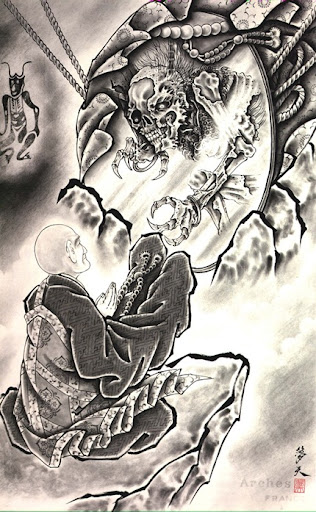
Secret shops were opened to serve those individuals who were passionate to get tattooed. After World War II, tattooing was declared as a legal activity and anyone who wished to get tattooed could act according to their wish without hiding from the general public. Japanese tattoo designs got a chance to flourish and even the Western world started to notice the appeal of these designs and tattooing techniques.
When we get to learn the history behind Japanese tattoo designs, we understand how the perspective towards tattooing changed from the purposes of decoration to the purpose of punishment and then back to decorative accessories.(Kato)
Around the year of 700 AD, attitudes towards tattoos changed and tattooing had become unpopular in Japan. It was treated as the symbol of criminals and as a way to punish guilty persons. It was a way to treat them differently and to outcast them from society. It was declared by the rulers then as an illegal activity for common people to tattoo themselves. Family members segregated their fellow members if he or she got a tattoo design on his or her body.
Even though getting a tattoo became illegal, there were still people who were passionate about getting one. They got themselves tattooed in places of the body that would not be visible to others, to prevent getting punished and to prevent themselves getting separated from their community or their group.
As the number of persons getting tattoos reduced, the popularity of the native designs and techniques started to fade. Only a few tattoo designers were still able to continue their tattooing work and most of those that were skilled found different jobs.
Secret shops were opened to serve those individuals who were passionate to get tattooed. After World War II, tattooing was declared as a legal activity and anyone who wished to get tattooed could act according to their wish without hiding from the general public. Japanese tattoo designs got a chance to flourish and even the Western world started to notice the appeal of these designs and tattooing techniques.
When we get to learn the history behind Japanese tattoo designs, we understand how the perspective towards tattooing changed from the purposes of decoration to the purpose of punishment and then back to decorative accessories.(Kato)
Japanese Kanji Tattoo
What's So Special About Kanji Tattoo Designs?
Kanji tattoo designs are characters from a cryptic Japanese alphabet. This style of tattoo has become very popular within all of North America. You have likely seen these tattoos before, and maybe you would like to get one yourself. But, what is so special about Kanji tattoo designs?
Getting a tattoo of a Kanji symbol is very common. You can make use of these ancient characters to create a tattoo that represents love, strength, or anything else that is important to you in your life. Many people get this type of tattoo because they are really trendy at the moment, but they are also a really great way to get a subtle tattoo that does not take up a lot of space.
If you are thinking of getting a Kanji tattoo, you should definitely take your time to do the research for what you plan to get before you go and get it. There is quite a bit of confusion in many of the symbols, and you will not want to make the mistake of getting a symbol that means one thing when you think it means something else. This is something that has happened to a lot of people, and it is not a pleasant experience.
There are many online tattoo design directories that can show you endless ideas that you can use for your tattoo. These sites will generally have a category that is specifically for Kanji designs. You can use these as a resource to find something that means what you want it to mean.
Kanji tattoo designs are a great idea for anybody who wants to get a simple tattoo that is subtle and means something very personal to them. These tattoos will be forever, so make sure that you do the research to find one that truly means something for you.
By Greg E. West


Getting a tattoo of a Kanji symbol is very common. You can make use of these ancient characters to create a tattoo that represents love, strength, or anything else that is important to you in your life. Many people get this type of tattoo because they are really trendy at the moment, but they are also a really great way to get a subtle tattoo that does not take up a lot of space.
If you are thinking of getting a Kanji tattoo, you should definitely take your time to do the research for what you plan to get before you go and get it. There is quite a bit of confusion in many of the symbols, and you will not want to make the mistake of getting a symbol that means one thing when you think it means something else. This is something that has happened to a lot of people, and it is not a pleasant experience.
There are many online tattoo design directories that can show you endless ideas that you can use for your tattoo. These sites will generally have a category that is specifically for Kanji designs. You can use these as a resource to find something that means what you want it to mean.
Kanji tattoo designs are a great idea for anybody who wants to get a simple tattoo that is subtle and means something very personal to them. These tattoos will be forever, so make sure that you do the research to find one that truly means something for you.
By Greg E. West
Subscribe to:
Comments (Atom)